A bigger nest should solve a real problem
Check what the next floor unlocks in your current game before spending Cash. It might give another worker a place to stand, open an area, or move you closer to a later expansion. If it does none of those things you need right now, save the Cash.
Colony expansion can create room for more ants as the nest grows. Read the board in your server for the next cost and exact unlock. Do not assume every floor adds the same number of usable ant positions.
Floors and ant positions are related, not identical
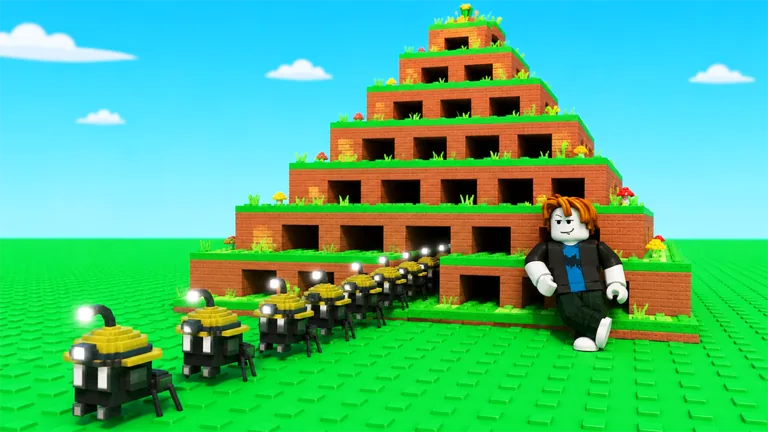
A floor is part of the structure. An ant position is a place where a worker can actually stand and collect food. The two often grow together, but you should check both separately. Look at the nest before a purchase: count the accessible levels and identify every visible placement position. Then read the next expansion’s description and cost.
If the board says it opens a new level, find out whether that level includes a usable position now. If the board specifies extra positions, check how many are actually accessible after purchase. You may also need to move your camera or walk to the new area before the prompt appears. This small inspection is more reliable than assuming the nest graphic alone tells you your capacity.
Keep a simple before-and-after record when an expansion is unfamiliar. Count working ants, empty spots, and accessible floors. Buy one level, look again, and place a waiting ant if a spot opened. You will see exactly what that level changed in your colony.
When a new floor is worth the Cash
Expansion makes the most immediate sense when all accessible positions are occupied and you already have, or can soon obtain, an ant worth placing. A stored worker cannot move food while there is nowhere to put it. A new position can therefore turn a successful roll into active production.
Another reason is an explicit unlock shown on the current board. If an area, station, or later upgrade requires a particular expansion, the floor may be the bridge to that goal. Verify the stated requirement in the game rather than treating every visible wall or upper level as proof of an unlock.
Expansion can wait when you still have an empty usable position. Place an ant there first. It can also wait when your existing ants are busy but your real problem is selling collected food or improving its value. Extra structure by itself does not guarantee a larger next Cash payout. Compare the live cost with the food, speed, or roll upgrade that would address your actual bottleneck.
A sensible purchase sequence
First, finish the current food-to-Cash loop and look at your balance. Second, inspect your nest for any empty accessible position. Third, read the next floor’s cost, stated benefit, and prerequisites. If it gives you useful room now, buy one level and verify the result. If the benefit is only a distant goal, save the Cash until you can also use the new area.
Floor costs may change as you progress or when the game is updated. Use the price on your board and check your current nest before deciding which expansion comes next.
If you are deciding between another floor and replacing a weaker ant, inspect the replacement control before touching it. Check whether removing the old ant stores it, discards it, or refunds anything. If that outcome is unclear, buying space may be safer, provided you can afford and use it.
FAQ
How do I add colony floors in Build An Ant Empire?
Find the colony expansion purchase in your game, read its current requirement and Cash price, then buy one level and inspect the nest for the opened area.
Does every floor add an ant slot?
Do not assume so. Count the actual placement prompts before and after the purchase.
Should I expand before rolling more ants?
Check whether you already have an empty position. If the nest is full and you have a useful ant waiting, expansion may let that ant start working.
What if I bought a floor but cannot place an ant?
Inspect the new area and the board description. The floor may not have opened a position, or the placement prompt may be elsewhere in the nest.